
Introduction: Recreation Center and Facility Management in 2026
A recreation manager's morning can start with a broken pool pump and a no-show instructor. By noon, a coach wants a refund and a rental group has been double-booked into the gym. Spaces, programs, staff, members, payments, maintenance and safety all move at once.
Demand is real. In 2025, 24% of respondents had visited a recreation or senior center, according to NRPA's engagement survey. The same survey found 41% cite lack of time as a barrier to using parks and recreation.
This guide covers the whole management function, not just booking software. It walks through operations, finances, staffing, safety and technology for U.S. recreation centers and activity-based facilities.
Key Takeaways for Recreation Center and Facility Managers
- Connect schedules, programs, staff, safety and finances in one operating plan.
- Cut manual work and make services easy to book and pay for.
- Pick technology that fits your model: memberships, classes, rentals or lessons.
- Review utilization, participation, revenue, safety and maintenance numbers on a set schedule.
What Recreation Center and Facility Management Means in 2026
Recreation center, facility and leisure management
Recreation center management coordinates programs, participants, memberships, staff and services. Facility management leans toward spaces, equipment, maintenance, safety and readiness. The International Facility Management Association (IFMA) describes the latter as integrating "people, place and process within the built environment."
Leisure management is the planning, delivery and ongoing improvement of activities people choose for fitness, sport, learning, wellness and community life. Most facilities do all three jobs at once.
Who this applies to
The framework fits municipal and park-district facilities, schools, community centers, sports academies, swim clubs, fitness centers and dance studios. Any organization running scheduled or instructor-led activity qualifies.
The 2026 operating environment
Expect pressure in these areas:
- Online self-service and mobile access
- Flexible programming that fits busy schedules
- Staff efficiency amid seasonal hiring challenges
- Accessibility, including the DOJ web rule (WCAG 2.1 AA, with deadlines of April 26, 2027 or 2028 depending on population)
- Responsible data use: 65% of residents want signage wherever monitoring technology is used
- Decisions backed by data, not habit
Core Responsibilities of Recreation Center and Facility Managers
Daily operations and service standards
Managers set opening and closing procedures, front-desk workflows, escalation paths and consistent policies across shifts. A typical day looks like this:
- Open the building and check the maintenance and incident log.
- Review the day's calendar for rentals, classes and blocked spaces.
- Check in participants and confirm waivers and payments.
- Deliver programs and log issues as they happen.
- Resolve exceptions, then reconcile payments at close.

Schedules, spaces and resources
Recurring classes, one-time rentals, lessons, maintenance closures, setup time and capacity limits all compete for the same rooms. One current calendar with clear booking rules prevents double bookings, idle space and rushed turnovers.
Useful rules include:
- Cap maximum reservation lengths
- Require buffer time between bookings
- Block maintenance windows on the calendar
- Set capacity caps per space
Programs, memberships and participation
Memberships, drop-in access, passes, classes, camps, rentals and private instruction each need their own eligibility rules, waivers, capacity controls and cancellation terms. Mixing them without clear rules is where confusion starts.
National benchmarks put the scale in context. The 2026 NRPA review shows the typical agency runs 300 programs a year, and 80% offer fee-based programming.
Treat these as agency-wide medians, not targets for one center. Use your own participation data to expand popular offerings, retire weak ones and spot groups you aren't reaching.
Staff structure
Supervisors, front-desk staff, instructors, coaches, lifeguards, maintenance crews, seasonal workers and volunteers each need defined duties, handoff steps and access permissions. Training should cover:
- Customer service and accessibility
- Emergency procedures and incident reporting
- Safeguarding
- The technology staff use daily
Staffing is a real constraint. In NRPA's 2023 survey, 30% of agencies reduced pool or aquatics hours because of seasonal staffing problems, and 28% capped summer-camp enrollment.
Safety, accessibility and readiness
Build readiness around preventive maintenance, equipment inspections, incident documentation, emergency action plans, weather and closure procedures, sanitation and accessibility checks. Assign each corrective action a name and a date.
Requirements differ by facility type, program affiliation and jurisdiction. Verify federal, state and local rules for your situation. A few frameworks to check:
- ADA Title II (state and local governments) or Title III (public-serving businesses)
- CDC Model Aquatic Health Code, which is guidance until your jurisdiction adopts it
- CPSC public playground handbook
- OSHA emergency action plan rules where applicable
- SafeSport policies for covered Olympic and Paralympic affiliates
Finances and cost recovery
Track registrations, memberships, rentals, point-of-sale sales, refunds, failed payments, labor, maintenance spending and program-level performance.
The typical public agency recovers about 26% of operating expenses from non-tax revenue.
Pair financial measures with service measures. Chasing cost recovery can undermine affordability and access, and 19% of people already cite cost as a barrier.
How Technology Supports Modern Recreation Facility Management
Centralized scheduling
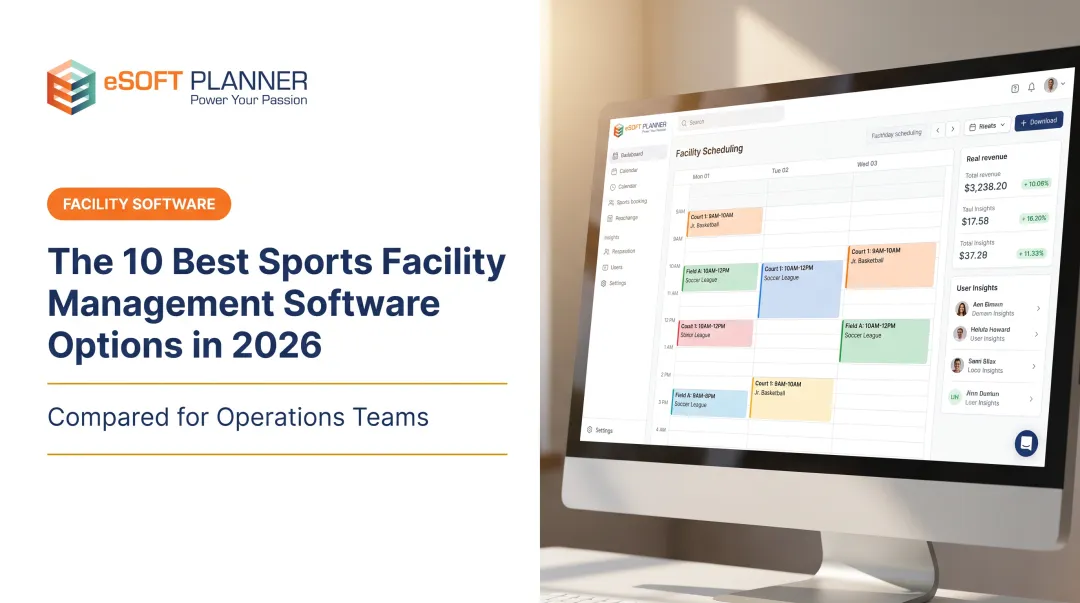
A shared, real-time calendar should show spaces, instructors, equipment, hours, capacity, recurring reservations, maintenance blocks and approval status. Automated conflict checks and permission controls cut duplicate bookings and leave an audit trail of who changed what, and when.
Connected registration and payments
Online registration, memberships, recurring payments, waivers, refunds, check-in and account updates work best as one connected workflow rather than separate spreadsheets. Staff then see customer, program and payment information in one place, without retyping it.
Self-service for customers and staff
Customers expect to book, join waitlists, cancel, update payment details and receive reminders from a phone. Santa Clarita's 2025 launch added mobile registration, digital membership cards, calendar syncing and digital-wallet payments. The city kept summer programs on the old system and moved fall registration over on July 1, with phone and community-center help for new accounts.
Self-service reduces front-desk queues and repetitive calls. Keep staff available for exceptions, accessibility needs and complicated account problems.
Reporting and integrations
Useful reports include:
- Utilization by space and time
- Participation
- Cancellations
- Revenue and outstanding balances
- Staff workload
- Maintenance issues
- Customer feedback
Decide which system is authoritative for each data type. Payments, access control, accounting, communications and your website may all connect.
A March 2026 municipal software RFP from Littleton, Massachusetts, for example, asks for tap-to-pay, PCI-DSS compliance, door and kiosk access, and finance-system export. That shows the integration categories, not a universal specification.
On security, the FTC advises keeping only needed data, requiring multi-factor authentication and maintaining an incident-response plan.
Matching software to your operating model
A municipal department managing public assets may need broader permitting, inspection and reporting tools. A sports, swim, dance or fitness facility often cares more about instructor scheduling, memberships, bookings and automated customer workflows.
eSoft Planner is one option to evaluate for scheduled or instructor-based facilities. It is a cloud platform with a configurable, modular structure, starting at $39 a month. Capabilities include:
- Real-time online booking
- Double-booking prevention
- Automation of administrative tasks
It was built by operators of a sports training facility and has been shaped by sports academies, swim clubs and community centers. It is not a universal replacement for municipal asset management, maintenance or compliance systems. Evaluate it against your own requirements.
Strategic Priorities for a Sustainable Recreation Center
Staff skills and accountability
Train teams in the skills that keep a center running:
- Leadership, scheduling and budgeting
- Communication, conflict resolution and customer service
- Safety awareness, data literacy and technology
Document onboarding and ongoing training for full-time, part-time, seasonal, contract and volunteer workers, with role-specific checklists and clear expectations. Schedule emergency retraining at least quarterly.
Programs built around community needs
Shape the calendar around real demand:
- Participation data and member feedback
- Demographics and seasonal demand
- Instructor strengths and available space
Revenue matters. One example: a two-hour camp with 25 to 50 children paying $30 each brings in $750 to $1,500, versus $200 for a field rented at $100 an hour for the same time.

Balance those earners with youth, senior, adaptive and scholarship programs. About 70% of agencies offer programs for people with disabilities, though availability says nothing about quality.
Customer experience
Map the journey from discovery to registration, arrival, participation, updates, renewal and feedback. Find where delays or confusing policies cause friction. Make websites, booking pages, emails, signage and front-desk scripts say the same thing.
Safety and resilience
Keep operations reliable with the basics:
- Preventive maintenance and inspections
- Incident review and emergency plans
- Accessible design and weather contingencies
- Data protection
Use NIST's CSF 2.0 small-business guide for cybersecurity basics: MFA, need-to-know access and tested backups. Every inspection finding needs an owner and a deadline.
Measurable goals
Build a balanced scorecard:
- Utilization and participation
- Renewal or retention
- Revenue and cost recovery
- Staffing efficiency
- Customer satisfaction
- Accessibility
- Safety incidents
- Maintenance completion
Benchmarks are patchy. HFA reports nearly 7 billion U.S. fitness-facility visits in 2025, but visits are not renewal rates. Set your own baseline first, then pick realistic targets.
How to Create and Implement a 2026 Recreation Center Management Plan
Audit current workflows first
List every facility, program, resource, staff role, booking channel, payment process, report, and spreadsheet. Note recurring problems, then assign a cost to each:
- Double bookings
- Missed payments
- Unused spaces
- Repeated data entry
- Late reports
- Unresolved maintenance requests
Select and implement in stages
Split requirements into must-haves and nice-to-haves. Then evaluate:
- Usability and configuration
- Mobile access
- Security and data ownership
- Integrations and hardware compatibility
- Support and training
- Pricing and contract terms
Roll out in phases:
- Clean existing data
- Review the migrated data with the vendor's onboarding team
- Train staff
- Notify customers
- Run a pilot with contingency procedures ready
- Review after launch before expanding
Measure and refine
Set a recurring review of these metrics:
- Utilization and participation
- Revenue and payment recovery
- Customer feedback
- Staff workload
- Safety and maintenance
- System performance
Name an owner for every corrective action.
A 2026-ready center is built through continuous improvement. Align people and processes first, then use well-configured technology to make reliable service easier to deliver.

Frequently Asked Questions
What skills are needed for a recreation supervisor?
Leadership, scheduling, budgeting, communication, customer service, staff development, safety, conflict resolution and basic technology skills. Requirements vary by employer and facility type.
What is meant by recreation center?
A facility that offers organized physical, social, educational, cultural or wellness activities. Services may include memberships, classes, sports, rentals or community programs.
What does leisure management mean?
It is the planning, operation, staffing, marketing and evaluation of activities and facilities people use in their free time.
What features should recreation center management software include?
Scheduling, registration, memberships, payments, capacity controls, communications, reporting, mobile access, integrations and security. Prioritize by your operating model.
How can recreation centers prevent double bookings and improve utilization?
Use a real-time shared calendar with automated conflict detection, capacity and resource rules, maintenance blocks and approval workflows. Add utilization reports and clear staff booking procedures.