
That's the real measure of a program players love. It's not talent alone. It's culture, connection, and consistency.
The hard part is delivering all three while also handling scheduling, communication, and payments. Many program directors spend more time untangling spreadsheets than coaching. This guide covers building culture, designing practices players actually want to attend, running smooth operations, managing game day, and setting up long-term growth.
Key Takeaways
- Culture and belonging drive retention more than wins do
- Age-appropriate coaching and clear communication build trust with players and parents
- Time-blocked, station-based practices keep reps high and boredom low
- Automated scheduling and communication tools free coaches to focus on players
- Process-focused feedback and flexible goals sustain motivation through slumps
Building a Culture Players Actually Want to Be Part Of
The average child quits organized sports within three years, often by age 11. Project Play's research with Utah State University's Families in Sports Lab found the pattern spans youth sports broadly, not just one sport. The number one reason kids give for quitting? It stopped being fun.
That's a warning sign for any softball program: culture is the retention strategy.
Set Expectations Early
A simple team handbook or code of conduct removes guesswork. Cover:
- Effort and attendance expectations
- Communication norms between coaches, players, and parents
- Behavior standards, on and off the field
Give Players a Voice
Kids stay engaged when they feel ownership. Try:
- Rotating team captains
- Letting players lead warm-ups
- Choosing 1-2 team goals together at the start of the season
Age-Specific Coaching Approaches
Coaching a 9-year-old and coaching a 16-year-old require different playbooks. A 2021 narrative review of youth athlete development models describes sampling years (roughly ages 6-13) as the time for broad skill exploration. Specialization and investment years follow as players mature. Readiness depends more on biological maturation than birth year alone.
Younger players (8U-10U): Keep feedback short. One demonstration, one cue. "Watch my glove, then you try." Fun and fundamentals come first.
Older players (high school): Ask questions instead of giving answers. "What did you see on that pitch? What would you do differently?" This builds the mental game they'll need under pressure.
The review notes that positive coach interaction and enjoyment directly influence whether kids stick with a sport. That principle holds at every age. Only the delivery changes.
Designing Practices That Keep Players Engaged
NFCA's practice-planning guidance emphasizes a well-thought-out plan over improvisation. A basic structure works well:
- Warm-up (10-15 min) : movement prep, arm care
- Stations (25-35 min) : small groups rotating through hitting, fielding, and situational work
- Situational play (15-20 min) : live game scenarios
- Cool-down (5-10 min) : a short competitive closer

Why Stations Beat Standing in Lines
Rotating small groups through stations maximizes reps and minimizes downtime. NFCA's drill guidance recommends specifying focus, duration, equipment, and coach assignments for each station rather than winging it.
Mix in competitive elements:
- Knockout fielding games
- Point challenges between groups
- Timed hitting contests
End every practice on something fun. A quick team game or challenge sends players home wanting to come back.
Tracking Engagement Over a Season
Attendance dips are often the first sign of a culture problem. A scheduling platform that logs check-ins automatically makes it easy to spot which weeks and which players are drifting, before players start dropping out.
Running Smooth Program Operations Behind the Scenes
Disorganized scheduling erodes trust fast. Double-booked fields, last-minute cancellations, and confusing communication all quietly tell parents "this program isn't well-run," even if the coaching is great.
Common friction points:
- Two teams showing up to the same cage
- Parents finding out about a rainout after they've already driven to the field
- Families waiting on invoices that arrive late—or never show up
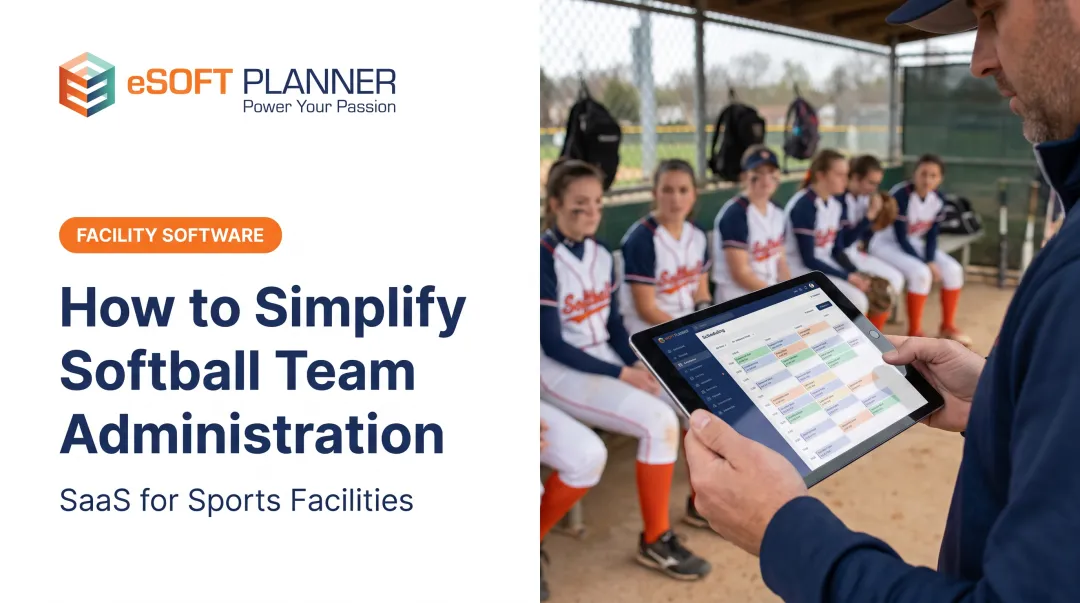
Automated scheduling and registration prevent these headaches. Online booking lets families register, pay, and sign waivers without a staff member touching a spreadsheet. Real-time communication tools push practice changes and game updates instantly, instead of relying on a group text chain that half the team misses.
eSoft Planner was built by former sports facility operators to stop double bookings before they happen. If a facility caps games at a certain number of teams per time slot, the system simply won't allow another booking until space opens up.

In practice:
- El Paso Legends Baseball Academy (17 cages, up to eight teams daily) uses self-service registration and text/email alerts so parents hear about closures without staff making individual calls.
- Compound Sports uses mass communication tools to notify parents about cancellations with a single message instead of individual phone calls.
eSoft Planner's pricing is flat and scalable, starting at $39/month, so programs can add teams or families without the software bill climbing alongside them.
Game-Day Management That Builds Confidence
Players play looser when the routine is predictable. A consistent pre-game sequence with a set arrival time, warm-up order, and a few minutes of mental prep reduces anxiety before the first pitch.
Coaches should walk in prepared, not reactive:
- Set the lineup the night before
- Prep the defensive plan and scouting notes
- Sketch a substitution plan for close games
This preparation lets coaches stay calm during the game instead of scrambling between innings.
Post-game feedback works best in two layers:
- A brief team huddle celebrating collective effort
- Private, individual corrections delivered later, not in front of teammates
Separating the two keeps morale up while still addressing what needs fixing.

Motivating Players and Building Mental Toughness
Softball is a game of failure. Even great hitters fail most of the time. Normalizing that reality, rather than treating every strikeout as a crisis, keeps players resilient.
Clear goals give that resilience somewhere to go. A 2023 peer-reviewed review of goal-setting in sport found that specific, moderately difficult goals tend to outperform both vague "do your best" goals and overly ambitious ones.
Help players set targets they can actually hit, then raise the bar as they improve.
Individual check-ins matter just as much as team talks. Some players respond to competition, others to encouragement. A five-minute conversation asking "what's working for you right now?" often reveals more than a season of guessing.
Celebrate the process:
- Praise a good at-bat approach, even if the result was an out
- Recognize hustle on a ground ball, not just the outcome
- Point out a smart read on the bases
Process praise carries players through slumps without tying their confidence to the scoreboard alone.
Planning for Long-Term Program Growth
Programs players love don’t peak for one season and fade. Build a year-round rhythm that develops athletes and gives families a reason to return.
Structure the year in phases:
- Pre-season: fundamentals, conditioning, team-building
- In-season: competition, situational reps, game management
- Post-season: individual evaluations, player feedback
- Off-season: skill-specific development, rest

Invest in Coach Development
Phases only work when the people running them keep learning. NFCA's coaching endorsement pathway requires attending sessions covering pitching, hitting, or defense within a four-year window, with renewal every three years. USA Softball's ACE program offers similar continuing education for coaches at every level.
Sending staff to even one clinic a year, then reviewing what changes in practice, keeps a program improving instead of stagnating.
Track Progress Over Time
Development plans need proof families can see. Simple participation and attendance reports—exportable and easy to share—show tangible progress across a season. Players and parents who can see growth are far more likely to stick around next year.
Frequently Asked Questions
What are some effective strategies for coaching softball players?
Clear communication, age-appropriate feedback, and consistent routines matter more than any single drill. Celebrating effort alongside results keeps players motivated through the ups and downs of a season.
How do I build a positive culture on my softball team?
Set expectations early with a team handbook, give players a voice in goals and leadership, and model the values you want consistently. Culture is built through repetition, not a single speech.
How often should a youth softball team practice each week?
There's no universal standard. Frequency should depend on age, season phase, and player workload, typically ranging from one to three sessions weekly with rest and recovery built in.
What makes a softball program successful long-term?
A blend of strong culture, age-appropriate development, and efficient administration. Programs that communicate clearly and run smoothly behind the scenes retain more players season after season.
How can technology help run a softball program more efficiently?
Scheduling software reduces admin burden by preventing double bookings, automating registration and payments, and sending real-time updates to parents. That frees coaches to focus on players instead of spreadsheets.
What is the biggest mistake new softball coaches make?
Under-planning practices and over-focusing on skills while ignoring culture. Players stick around for how the program makes them feel, not just how much they improve technically.