Many facility owners struggle with the same challenges: 70-80% of annual revenue compressed into 3-5 months, underutilized space during off-peak hours, scheduling chaos, and missed opportunities hidden in daily operations. The difference between a struggling facility and a thriving one often comes down to five strategic areas: space optimization, recurring revenue, peak-hour management, automation, and diversification.
This guide breaks down the proven strategies successful baseball facilities use to maximize profitability, stabilize cash flow, and build sustainable growth—without adding staff or expanding square footage.
Key Takeaways
- Revenue per square foot is your most important profitability metric. Track it by zone and service type
- Recurring revenue through memberships and team contracts creates predictable cash flow and reduces administrative burden
- Dynamic pricing and strategic scheduling protect peak hours for premium bookings while filling off-peak capacity
- Facility management software eliminates double-bookings, reduces no-shows, and enables 24/7 booking without added staff
- Diversify beyond rentals with camps, retail, events, and clinics to cushion seasonal swings
Understanding Your Facility's Revenue Potential
Revenue per square foot is the fundamental metric that separates profitable baseball facilities from those barely covering rent. It shows how effectively you convert physical space into income and which areas underperform.
Primary revenue sources for baseball facilities:
- Batting cage and field rentals
- Private and group lessons
- Team training contracts
- Memberships (monthly or annual)
- Camps, clinics, and development programs
- Retail and pro shop sales
- Birthday parties and corporate events
Baseball facilities also hold clear advantages over outdoor-only operations:
- Year-round indoor demand keeps revenue flowing beyond spring and summer
- Private instruction and other high-value services support premium rates
- Weekly youth players and seasonal teams create repeat, relationship-based bookings
The Seasonality Reality
According to the American Baseball Coaches Association, indoor sports businesses may earn 70-80% of annual revenue during three to five poor-weather months, requiring facilities to maintain reserves for off-season rent, staff, and utilities. This concentration of income makes cash-flow management and strategic planning essential, not optional.
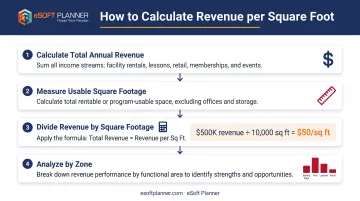
Calculate your current revenue per square foot:
- Total your annual revenue from all sources
- Divide by your facility's usable square footage (exclude offices, bathrooms, storage)
- Break down revenue by zone: cage area, field space, lesson rooms, retail
- Identify which spaces generate the highest return and which underperform
Use those zone numbers to decide what to promote, reprice, reconfigure, or expand first.
Strategy 1: Optimize Space Utilization and Pricing
Maximize Batting Cage Revenue
Batting cages typically deliver the highest revenue per square foot in a baseball facility. Their compact footprint, minimal setup requirements, and high booking frequency make them your most valuable real estate.
Implement dynamic pricing:
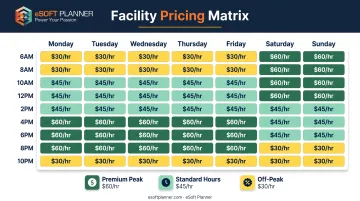
- Peak hours (weekday evenings 4–9 PM, weekend mornings): charge premium rates; facilities like D-BAT Buckhead charge $60/hour for nonmembers in high-demand windows
- Off-peak hours (weekday mornings and early afternoons): offer discounted rates to fill empty capacity
- Package deals: sell 10-session bundles or monthly unlimited passes to lock in commitment and cut transaction overhead
Hourly minimums prevent low-value bookings during prime time. Monthly passes create predictable recurring revenue while simplifying scheduling.
Smart Field and Multi-Purpose Space Usage
Fields and open turf should work as hard as your cages. A convertible turf field that hosts team practices can also run youth clinics, softball training, birthday parties, and corporate team-building events, each at a different price point.
Scheduling priorities:
- Lock in high-value team contracts during peak hours for guaranteed recurring revenue
- Reserve flexibility for premium one-off rentals that command top rates
- Fill remaining slots with lower-priority individual bookings
Group bookings and team contracts deliver more predictable revenue than individual public rentals. One team practice with 12 players generates more income per hour, with less administrative work, than coordinating multiple individual reservations.
Implement Strategic Pricing Models
Tiered pricing structure:
- Youth rates for recreational players and developmental programs
- Adult rates for individual and small-group training
- Team rates with volume discounts for seasonal contracts
- Tournament and event rates set at a clear premium
Surge pricing for high-demand periods (pre-season prep, playoff training) captures willingness to pay when demand exceeds supply. Require deposits or full prepayment on every booking to cut no-shows and secure cash flow before you deliver the session.
Scheduling software with tiered rates, peak/off-peak rules, and automated deposits makes these pricing models enforceable without extra front-desk work.
Strategy 2: Build Recurring Revenue Streams
Recurring revenue stabilizes cash flow and raises customer lifetime value. Three approaches work especially well for baseball facilities: memberships, team contracts, and multi-week programs.
Create Tiered Membership Programs
Memberships turn one-time visitors into monthly income. A clear tier structure offers escalating benefits that match different commitment levels.
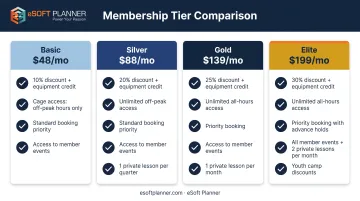
Sample membership tiers:
- Basic ($48/month): 10% discounts on all services, monthly equipment credit
- Silver ($88/month): Unlimited off-peak cage access, 15% discounts, priority lesson booking
- Gold ($139/month): Unlimited all-hours access, 20% discounts, one monthly private lesson included
- Elite ($199/month): All Gold benefits plus two monthly lessons, exclusive training programs, free camps
D-BAT Buckhead uses month-to-month memberships with no setup or cancellation fees, offering Platinum members unlimited daily machine access and 30% off lessons and camps.
Price memberships so customers recover their investment in 3-4 uses, creating clear value while protecting your margins. Track utilization so members get their benefits without crowding peak hours.
Develop Long-Term Team and League Contracts
Seasonal contracts with travel teams, high school programs, and college teams lock in guaranteed revenue that holds up through slow periods.
Effective contract structure:
- Minimum weekly or monthly booking commitments (such as two practices per week for 12 weeks)
- Advance payment schedules (50% upfront, remainder by season midpoint)
- Clear cancellation policies with notice requirements
- Slight discounts (10-15%) for long-term commitments
Long-term agreements give you predictable income for planning and cut time spent chasing one-off bookings. Those relationships often lead to referrals, camps, and private lessons.
Offer Multi-Week Camps and Clinics
Structured programs create concentrated revenue in set windows while introducing your facility to future long-term customers.
Profitable camp structures:
- Weekly skill development clinics (hitting, pitching, fielding)
- Position-specific intensives (catchers, infielders, outfielders)
- Off-season training programs (strength, speed, mechanics)
- Pre-season prep camps timed before spring seasons
Price camps to cover instructor costs, space, and admin time while staying competitive locally. Partner with respected local coaches or former pro players to stand out and support premium pricing.
Strategy 3: Maximize Peak Hours and Fill Off-Peak Times
Identify your facility's true peak versus off-peak hours by analyzing usage data and demand patterns. Reserve peak hours (typically weekday evenings 4–9 PM and weekend mornings) exclusively for your highest-value bookings: team contracts, premium private lessons, and league play.
Strategies for filling off-peak hours:
- Discounted youth development programs during school hours
- Affordable weekday morning slots for senior baseball groups
- Homeschool physical education blocks mid-morning
- Corporate team-building sessions during business hours
- Early-bird specials (20–30% off) for weekday afternoon bookings
Off-peak memberships incentivize usage during slow periods without cannibalizing premium revenue. For example, a $69/month unlimited weekday-daytime membership fills empty capacity while keeping evenings and weekends available for higher-paying customers.
Extended Hours and 24/7 Access
Automated entry systems enable extended or 24/7 member access without additional staff costs. Members receive key fobs, access codes, or mobile credentials tied to their membership status and booked reservations. This approach monetizes otherwise-empty facility hours while providing convenience that justifies membership fees.
HitTrax facilities like HIT24 use members-only access with app-based booking and phone-based door entry. Members get one 60-minute daily session without onsite staff.
Strategy 4: Leverage Technology and Automation
Manual facility management drains time through phone scheduling, payment collection, double-booking conflicts, no-shows, and endless administrative tasks. These inefficiencies waste hours and cost revenue through missed calls, scheduling errors, and forgotten follow-ups.
Modern scheduling software eliminates these pain points while enabling 24/7 operations without additional staff.
Core benefits of facility management software:
- Online booking and payment so customers reserve and pay anytime, even when staff is offline
- Automated text and email reminders that cut no-shows and last-minute cancellations
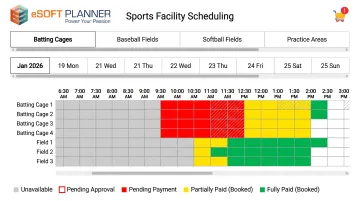
- Real-time availability that prevents double-bookings across cages, fields, instructors, and rooms
- Instant payment processing that shortens collection delays and improves cash flow
- Membership tracking that automates renewals, credits, and access permissions
eSoft Planner is scheduling software built by facility operators for sports businesses. Plans start at $39/month with à la carte modules for batting cage scheduling, team management, membership tracking, lesson coordination, and point of sale, with no contracts and support from staff who have run facilities.
The time savings add up fast. Baseline Sports, a 20,000+ sq. ft. Toronto baseball facility, cut booking work from 2–3 hours daily to 30–60 minutes with scheduling software, freeing 10+ hours each week for coaching and sales instead of the phone.
High-Tech Training Tools
Once admin work is under control, training technology becomes easier to sell and staff. Premium tools set your facility apart and support higher price tiers.
Options like HitTrax (interactive batting training and league play), Rapsodo (pitch and swing tracking from about $1,500–$8,500 depending on configuration), and high-speed cameras (Edgertronic at $8,999) power premium programs beyond basic cage rentals.
Diamond Sports Academy grew HitTrax league revenue from $80,410 in 2021 to $178,420 in 2022. That jump shows how the right tech stack opens revenue streams that hourly rentals alone cannot match.
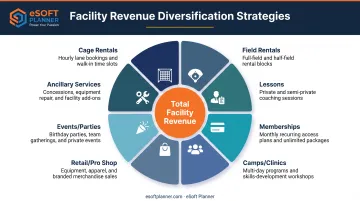
Strategy 5: Diversify Revenue Beyond Field Rentals
Relying solely on cage and field rentals limits profitability and creates vulnerability to seasonal fluctuations. Diversification stabilizes cash flow and maximizes revenue from existing customers.
Retail and Pro Shop Opportunities
Start small with high-turnover essentials: batting gloves, training equipment, water bottles, and branded apparel. Use consignment arrangements or partnerships with local suppliers before investing heavily in inventory.
Harford Sports Academy generates about 50% of total revenue from its pro shop, showing retail can grow into a core revenue pillar.
Event Hosting Revenue Streams
Birthday parties, team banquets, fundraisers, and corporate events generate premium revenue from space that might otherwise sit empty.
Package pricing example:
- $175/hour for exclusive use of three batting tunnels
- Staff supervision and HitTrax games included
- Add-ons: pizza, drinks, team photos, branded merchandise
Package pricing simplifies sales and increases average transaction value compared to hourly rental alone.
Ancillary Services
Additional revenue opportunities:
- Equipment repair and bat rolling services
- Video analysis and swing assessments
- Strength and conditioning programs
- Mental skills and sports psychology sessions
These services package expertise you already have, add little overhead, and give members more reasons to stay on-site longer.
Sponsorship and Advertising
Field naming rights, outfield wall banners, and dugout branding provide nearly pure profit with minimal ongoing costs. Local businesses pay for visibility to your player base: parents and athletes with disposable income and community connections.
Frequently Asked Questions
Are sports facilities profitable?
Baseball facilities can be highly profitable when managed strategically. Success depends on maximizing space utilization, building recurring revenue streams, and maintaining low overhead through automation. Profitability varies significantly by location, competition, and operational efficiency.
What are the main sources of revenue for baseball facilities?
Primary sources include batting cage rentals, field rentals, private and group lessons, team training contracts, memberships, camps and clinics, retail sales, and event hosting. The revenue mix varies based on facility size, location, and target market.
How should I price batting cages and field rentals?
Use dynamic pricing: premium rates for peak hours (evenings and weekends), discounts for off-peak. Local cage rates often run $50–60/hour; add packages that lower per-use cost and lock in commitment.
What's more profitable: memberships or one-off rentals?
Memberships win on recurring revenue, lifetime value, and less admin work. One-off rentals can earn more per hour but need constant marketing. Prioritize memberships for cash flow and reserve capacity for premium bookings.
How can I increase revenue during baseball's off-season?
Sell discounted training packages, youth programs, and winter camps. Host softball, lacrosse, or HitTrax leagues, and rent space for non-sports events. Peak-season revenue still needs to cover off-season expenses.
Is investing in technology like scheduling software worth it for a small facility?
Yes. Small facilities recoup cost through fewer no-shows, no double-bookings, 24/7 online booking, and time back for growth. Tools like eSoft Planner start at $39/month and fit small sports businesses.
Ready to maximize your baseball facility's revenue potential? Calculate revenue per square foot, identify your highest-value services, and implement one strategy from this guide. Small gains in utilization, pricing, and automation compound into stronger year-round operations.